 A health or environmental choice?
Across
the country, people are choosing to eat less meat for the health of
their bodies and the planet, whether for one meatless day per week or a
lifetime.
A health or environmental choice?
Across
the country, people are choosing to eat less meat for the health of
their bodies and the planet, whether for one meatless day per week or a
lifetime.
The
‘fake meat’ business has been around for decades, but it has not quite
taken off due to price or down to visual, textural or flavour failure.
However, the meat-fakers say they are on the verge of a breakthrough,
that there is a real possibility that a new era of fake meat –
nutritious, cheap and indistinguishable from the real thing, made either
of synthesised animal tissue or derived from plant material – may be
upon us.
 Human hair and skin become soiled due to its contact with the surrounding environment and from the sebum secreted by the scalp.
The soiling of hair and skin causes it to have a dirty feel and an unattractive appearance. Shampooing cleans the hair by removing excess soil and sebum. However, shampooing can leave the hair in a wet, tangled, and generally unmanageable state. Once the hair dries, it is often left in a dry, rough, lustreless, or frizzy condition due to removal of the hair's natural oils.
Human hair and skin become soiled due to its contact with the surrounding environment and from the sebum secreted by the scalp.
The soiling of hair and skin causes it to have a dirty feel and an unattractive appearance. Shampooing cleans the hair by removing excess soil and sebum. However, shampooing can leave the hair in a wet, tangled, and generally unmanageable state. Once the hair dries, it is often left in a dry, rough, lustreless, or frizzy condition due to removal of the hair's natural oils.
Chocolate continues to be the world’s favourite confection bringing to mind images of comfort, indulgence and taste.
With a successful product comes tough competition between the major players in the confectionery world to make new advances in product development. Pushing the development envelope to create new novel versions of such a product requires the tools to assess and compare the effects of new processes and ingredients. This is where texture analysis becomes a manufacturer’s best friend.
 The development of Texture Analysers has opened up a wealth of opportunities for adhesive testing and analysis.
Most recently the ability to replay, freeze-frame and share your product testing data using a Video Capture and Synchronisation System has been introduced. This is a fantastic tool for teaching others about the nature of your product and for those new to the field or, more importantly, to help you gain a frame-by-frame understanding of your product failure.
The development of Texture Analysers has opened up a wealth of opportunities for adhesive testing and analysis.
Most recently the ability to replay, freeze-frame and share your product testing data using a Video Capture and Synchronisation System has been introduced. This is a fantastic tool for teaching others about the nature of your product and for those new to the field or, more importantly, to help you gain a frame-by-frame understanding of your product failure.
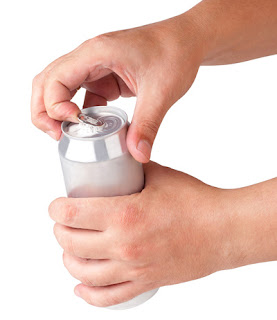 A new rig has been developed to allow manufacturers of food tins and beverage cans to measure the force needed to lift the ring pull and open the container.
This new development could signal the end of consumer frustration with trying to open metal packaging that is too stiff, or where the ring pull detaches from the lid.
Understanding and quantifying the force needed to use a ring pull is vital for both packaging manufacturers and their customers to ensure safety, functionality and consumer experience.
Perhaps
the easiest of meat products to recreate is the burger or “pattie” as
it can take a combination of ingredients in bulk and form a structural
mass that attempts to mimic a burger with dense mouthfeel.
The
use of quinoa, brown rice, bulgur and vegetables can be successfully
combined as a fibre-rich patty with the texture of a meat burger.
Texture is the most important sensory trait when evaluating meat products.
According to researchers at the Minister of Agriculture and Agri-Foods Canada: “The four important factors that determine meat tenderness are background toughness (determined antemortem), the toughening phase during rigor onset, the tenderisation phase (during the postmortem aging period), and the denaturation/solubilisation of proteins during cooking.
Creating
families, grouping by common properties: if Mendeleev managed to do it
for the elements, then why not collate the range of Stable Micro Systems
products into the instantly recognisable form of a periodic table?
Here
you will see how all the currently available probes and fixtures that can be attached to
a Texture Analyser can be grouped by test principle: Cutting &
Shearing, Puncture & Penetration, Friction, Extrusion, Tension, Peel
& Adhesion, Compression – plus Special Attachments and Accessories.



