 The development of Texture Analysers has opened up a wealth of opportunities for adhesive testing and analysis.
Most recently the ability to replay, freeze-frame and share your product testing data using a Video Capture and Synchronisation System has been introduced. This is a fantastic tool for teaching others about the nature of your product and for those new to the field or, more importantly, to help you gain a frame-by-frame understanding of your product failure.
The development of Texture Analysers has opened up a wealth of opportunities for adhesive testing and analysis.
Most recently the ability to replay, freeze-frame and share your product testing data using a Video Capture and Synchronisation System has been introduced. This is a fantastic tool for teaching others about the nature of your product and for those new to the field or, more importantly, to help you gain a frame-by-frame understanding of your product failure.
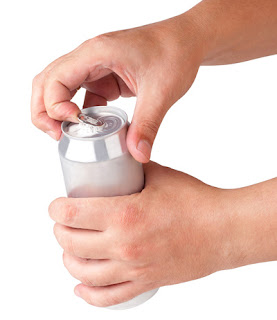 A new rig has been developed to allow manufacturers of food tins and beverage cans to measure the force needed to lift the ring pull and open the container.
This new development could signal the end of consumer frustration with trying to open metal packaging that is too stiff, or where the ring pull detaches from the lid.
Understanding and quantifying the force needed to use a ring pull is vital for both packaging manufacturers and their customers to ensure safety, functionality and consumer experience.
Perhaps
the easiest of meat products to recreate is the burger or “pattie” as
it can take a combination of ingredients in bulk and form a structural
mass that attempts to mimic a burger with dense mouthfeel.
The
use of quinoa, brown rice, bulgur and vegetables can be successfully
combined as a fibre-rich patty with the texture of a meat burger.
Texture is the most important sensory trait when evaluating meat products.
According to researchers at the Minister of Agriculture and Agri-Foods Canada: “The four important factors that determine meat tenderness are background toughness (determined antemortem), the toughening phase during rigor onset, the tenderisation phase (during the postmortem aging period), and the denaturation/solubilisation of proteins during cooking.
Creating
families, grouping by common properties: if Mendeleev managed to do it
for the elements, then why not collate the range of Stable Micro Systems
products into the instantly recognisable form of a periodic table?
Here
you will see how all the currently available probes and fixtures that can be attached to
a Texture Analyser can be grouped by test principle: Cutting &
Shearing, Puncture & Penetration, Friction, Extrusion, Tension, Peel
& Adhesion, Compression – plus Special Attachments and Accessories.
Are
you interested in the texture of pizza?
Clearly, the optimum extensibility of the dough and the desirable 'stretch' of the cheese are essential aspects of creating a great result for the consumer. The meat texture must also be suitable for this particular application.
But for quantity production there are also important checks that need to be made to ensure trouble-free processing, such as the ease of grating of the cheese and assessment of consistency of the pizza sauce.
 Texture
has always been an important consideration during product development.
It often determines a consumer’s first impression and thereby offers a
lasting impression to the eating experience.
Texture
has always been an important consideration during product development.
It often determines a consumer’s first impression and thereby offers a
lasting impression to the eating experience.
However, more
than ever we are seeing a huge increase in the interest and attention
being given to texture during product development. Innova Market Insights
has reported a significant increase in front-of-package texture claims
and the addition of creative language to communicate the texture
message. Ingredients also appear to be advancing to, for example,
improve the crunchiness of chips, the chewiness of soft candies, the
creaminess of sour cream, and much more, allowing for the formulation of
a myriad of products that consumers crave.
ASSESSMENT OF NOODLE PRODUCT PACKAGING
Not
only are the texture and physical appearance of noodle products crucial
for achieving aesthetic appeal and optimal functionality – other
factors concerning their look and feel can dictate their popularity.
The
packaging of a product can have a profound influence over purchasing
decisions. Catchy names and bright colours are part of the attraction
but packaging that performs the essential preservation function and is
easy to use is also a key persuasion.
Regardless of product
density, several texture analysis examinations can aid manufacturers in
producing the best packaging to suit the noodle product in question.
Available in cartons and packs, it is essential that the correct
packaging format is chosen in order for consumers to make complete and
convenient use of their noodle products.

 The development of Texture Analysers has opened up a wealth of opportunities for adhesive testing and analysis.


