Tuesday, 11 August 2020

Six Ways to Test the Physical Properties of a Tablet

Various tablet samples
Transforming a formulation into a successful solid dose tablet is a complex process that involves many considerations. Time and raw materials are both valuable and must be saved wherever possible in the production process, and getting production right in the early stages is crucial to prevent expensive faults and tablet defects in the downstream production process.

During compression, the ingredients can have a large effect on physical factors. For example, abrasiveness, moisture content and particle size all affect compressibility. Considerations must also be made of the properties of the finished product.

During their manufacture, tablets are subjected to a great deal of physical abuse within the hopper in which they are spun. During this time, chipping may occur. The extent of this depends on tablet hardness. It is undesirable in terms of product quality and is also a potential health risk to the consumer.

Tuesday, 4 August 2020

Stickiness in Foods - Desirable or unwanted?

Chewing gum on shoe
When a food is described as ‘sticky’, that may refer to one of several manifestations: adhesion to processing equipment, cohesion of powders, sticking to packaging, and sticking to fingers and parts of the mouth. This last characteristic affects the appreciation of food texture perceived during consumption.

In most food systems, the adhesion force in any one context is a combination of an adhesive force and a cohesive force. A food material is perceived as being sticky when the adhesive force is high and the cohesive force is low. Not all foods possess adhesiveness, and so it is not a property worth measuring in all cases. Adhesion can be either a benefit, drawback, or both depending on the circumstances.

Tuesday, 28 July 2020

The Packaging Research Revolution: Biodegradable Polymer Films

The Packaging Research Revolution: Biodegradable Polymer Films
The majority of countries worldwide are making an effort to reduce their mark on the planet, and cutting down on plastics is an obvious place to start because of the availability of alternatives, and due to the large amount of waste they leave behind.

One of the largest sources of single use plastics is packaging. There is a large amount of academic and industrial research into this area. Stable Micro Systems equipment is a regular feature of publications due to the need for mechanical property analysis; one of the drawbacks of biodegradable polymers is their reduced structural integrity. Consequently, Texture Analysers are necessary to perform tests for both R&D and quality control, once the product has reached production. The following are a selection of recent publications into this interesting and important field, specifically those focussing on polymer films.

Tuesday, 21 July 2020

The Packaging Research Revolution: Biodegradable polymer foams and rubbers

A major focus of current research in both industrial and academic institutions is the development of suitable alternatives to single use plastics. This has been driven by the worldwide push for a cleaner environment, and both the manufacture and disposal of plastics are harmful in separate ways.

Packaging is a large contributor to plastic production, particularly the single use sector. One method of reducing this production is to replace traditional polymers with biodegradable alternatives. A drawback of biodegradable plastics is their reduced strength and toughness. Mechanical properties are an important consideration when it comes to packaging, so their control is a crucial stage in the R&D process. Consequently, Stable Micro Systems feature heavily in publications from this field. The following are a selection of recent journal papers, specifically those focussing on polymer foams and rubbers.

Tuesday, 14 July 2020

Texture Analysis to Measure the Effects of Enzyme Addition on the Staling of Artisanal Bread: Part 3 – Texture Analysis Techniques

Texture Analysis to Measure the Effects of Enzyme Addition on the Staling of Artisanal Bread: Part 3
Texture Analysis techniques

Chemical tests are a major part of the research that can be performed to assess the extent of staling. These include the measurement of water activity, alkaline water retention capacity and the amount of soluble starch. However, it is the changes in physical properties listed above that are felt directly by the consumer when eating a loaf, and it is essential that these properties are monitored when developing new formulations. Texture Analysis can be used to test the properties of bread from dough to loaf.

Tuesday, 7 July 2020

Texture Analysis to Measure the Effects of Enzyme Addition on the Staling of Artisanal Bread: Part 2 - How can the Specifics of Staling Be Slowed or Prevented?

Texture Analysis to Measure the Effects of Enzyme Addition on the Staling of Artisanal Bread: Part 2
Improved packaging would seem the obvious choice to the home baker, keeping a loaf sealed in an air tight box to prevent moisture loss, but this is not the main solution. 

More importantly, enzymes, additives and emulsifiers can be added to counteract the mechanical property changes associated with staling. However, out of the three, the focus for artisan bread should be on enzymes.

It is not only the finished loaf that is affected by enzyme addition. The dough itself is also affected, and this can be useful for the manufacturer. Enzymes can be used to give a soft, elastic dough with low stickiness.

Monday, 29 June 2020

Texture Analysis to Measure the Effects of Enzyme Addition on the Staling of Artisanal Bread: Part 1 – Why does Staling Occur?

Texture Analysis to Measure the Effects of Enzyme Addition on the Staling of Artisanal Bread
Bread is a common, low cost food that is eaten readily worldwide, associated with traditions in many countries. 

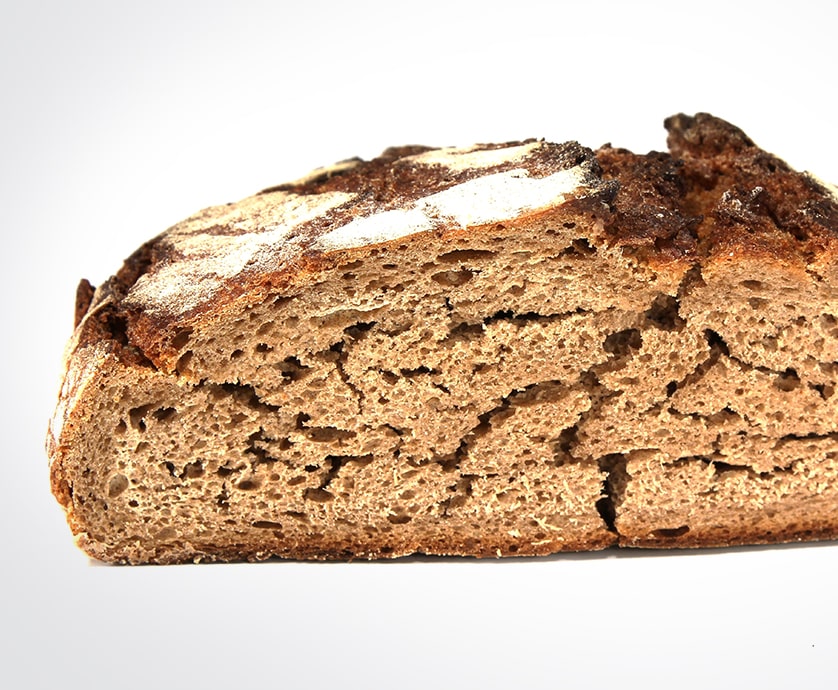
However, there has been a movement over the last decade or two towards products that are marketed as ‘clean label’, ‘plant-based’ or ‘artisan’, so supermarket shelves are seeing a shift from soft crust, cuboid loaves in coloured plastic bags to rustic looking crusty bread. Artisan bread is a term that has no absolute definition but refers to a style of short shelf-life bread that is usually offered unpackaged (in baskets) and consumed immediately after baking for maximum freshness.

Tuesday, 23 June 2020

Texture Analysis in Research: Latest Fish applications

Analysing the texture of fish on the Texture Analyser
According to Allied Market Research, the global seafood market is projected to reach $155,316 million by 2023, registering a CAGR of 3.6% from 2017 to 2023. 

Seafood is an excellent source of nutrition and provides numerous health benefits. A rise in awareness about these benefits is helping to drive the growth of the global seafood market, as well as other factors such as increasing disposable income, changing lifestyles and consumer diet preferences.