Texture Analysis techniques
Stable Micro Systems will no longer be posting to this blog, visit our new blog on our main website.
Click on banner above to go to the blog.
Tuesday, 14 July 2020
Texture Analysis to Measure the Effects of Enzyme Addition on the Staling of Artisanal Bread: Part 3 – Texture Analysis Techniques
Tuesday, 7 July 2020
Texture Analysis to Measure the Effects of Enzyme Addition on the Staling of Artisanal Bread: Part 2 - How can the Specifics of Staling Be Slowed or Prevented?
Improved packaging would seem the obvious choice to the home baker, keeping a loaf sealed in an air tight box to prevent moisture loss, but this is not the main solution.
More importantly, enzymes, additives and emulsifiers can be added to counteract the mechanical property changes associated with staling. However, out of the three, the focus for artisan bread should be on enzymes.
It is not only the finished loaf that is affected by enzyme addition. The dough itself is also affected, and this can be useful for the manufacturer. Enzymes can be used to give a soft, elastic dough with low stickiness.
More importantly, enzymes, additives and emulsifiers can be added to counteract the mechanical property changes associated with staling. However, out of the three, the focus for artisan bread should be on enzymes.
It is not only the finished loaf that is affected by enzyme addition. The dough itself is also affected, and this can be useful for the manufacturer. Enzymes can be used to give a soft, elastic dough with low stickiness.
Monday, 29 June 2020
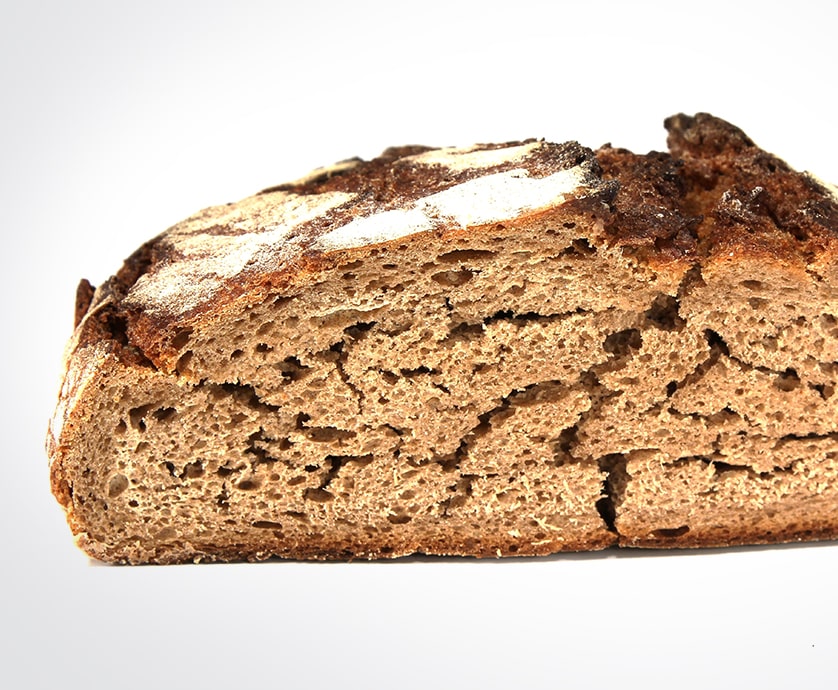
Texture Analysis to Measure the Effects of Enzyme Addition on the Staling of Artisanal Bread: Part 1 – Why does Staling Occur?
Bread is a common, low cost food that is eaten readily worldwide, associated with traditions in many countries.
However, there has been a movement over the last decade or two towards products that are marketed as ‘clean label’, ‘plant-based’ or ‘artisan’, so supermarket shelves are seeing a shift from soft crust, cuboid loaves in coloured plastic bags to rustic looking crusty bread. Artisan bread is a term that has no absolute definition but refers to a style of short shelf-life bread that is usually offered unpackaged (in baskets) and consumed immediately after baking for maximum freshness.
Tuesday, 23 June 2020
Texture Analysis in Research: Latest Fish applications
According to Allied Market Research, the global seafood market is projected to reach $155,316 million by 2023, registering a CAGR of 3.6% from 2017 to 2023.
Seafood is an excellent source of nutrition and provides numerous health benefits. A rise in awareness about these benefits is helping to drive the growth of the global seafood market, as well as other factors such as increasing disposable income, changing lifestyles and consumer diet preferences.
Tuesday, 9 June 2020
Texture Analysis in Research: Fat Replacers
Manufacturers often have motivation to remove fat from food products, but when something is removed from a recipe, it inevitably has to be replaced with another ingredient.
Sometimes that replacement is another type of fat, or it might be another ingredient altogether (to reduce the overall fat content of the food). Food manufacturers have to test the altered food in comparison with its original form to ensure that all textural properties remain the same within acceptable limits.
Monday, 8 June 2020
Dairy alternative market set to cause a stir
According to GlobeNewsWire, the global Dairy Alternatives market is expected to Reach USD 38.9 Billion by 2025.
Factors like increasing awareness of consumers toward a vegan diet, lactose intolerance among the population and demand for various fortified dairy food and beverage applications are boosting the market growth. Whilst the high cost of dairy alternative milk and prominence of low cholesterol and low fat conventional milk will impede the market growth, the innovation in flavour and sources of dairy alternative beverages and increasing demand for soy milk, rice milk and almond milk proteins provide wider opportunity for the market to grow.
Tuesday, 26 May 2020
Texture Analysis in Research: Confectionery
![]() |
| Three point bend test |
Confectionery ingredients provide stability, texture, and various other properties, and therefore, can be used to prepare a variety of food products.
More than 70% of consumers prefer the use of products that contain natural ingredients and therefore chose the products that claim to have no artificial ingredients. The trend for the use of clean-label products is rising due to the increase in health awareness among the consumers, and therefore, the manufacturers of confectionery products are attempting to make use of ingredients to develop innovative products that have low-fat content, low sugar content, etc. The development of such food products might attract health-conscious consumers, and thus, there might be an increase in the confectionery ingredients market.
Monday, 18 May 2020
Subscribe to:
Posts (Atom)